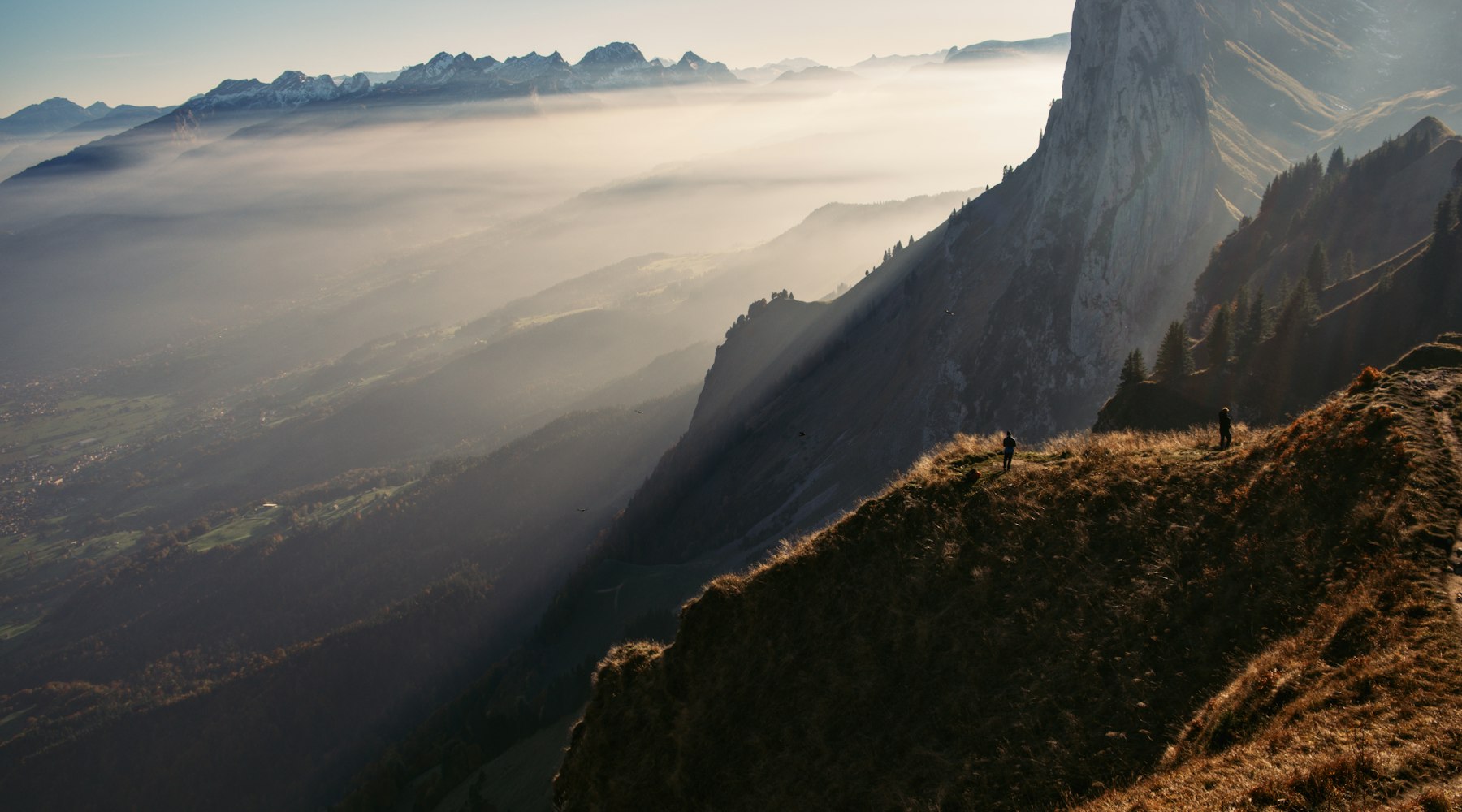
From ancestor peak to the last rise
A dragon has a lineage. The ancestor mountain, zu shan, is the high peak the range springs from. From it the range travels, dropping and rising, splitting and rejoining. The last big hill directly behind the site is the parent mountain, fu mu shan. Below the parent the ridge makes its final approach, the ru shou or entry. This last stretch matters most. It should narrow, drop, and lift again gently before it reaches the ground where you would place a grave or a house. If the entry is broken, nothing upstream can save the site.
Living dragon, dead dragon
A living dragon moves. The ridge bends left and right, rises into knots and sinks into saddles, and throws off side branches. Each time it drops and rises it sheds some roughness. Practitioners call this bo huan, or tuo sha, shedding the harshness. Rock turns to soil, sharp to round, steep to gentle. A range that has done this many times arrives soft and usable.
A dead dragon does not move. It runs straight as a wall, keeps one height for miles, has no knots and no branches. Graves on such ridges are common because the ground is easy to dig. In the form school view they are graves on nothing.
What this means on the ground
Start with a satellite map. Find the highest peak in the region and follow the ridge lines down from it toward the plot. You want a ridge that reaches the plot, not one that passes beside it.
Then walk it. Stand on the plot and look up the slope behind you. The last rise should be close, rounded, and centred. Walk up to that rise and look back down. The site should sit in its lap, not on its shoulder. A suburban house takes the same test with smaller hills. In the Tianxing school the landform is read first and the twenty-four stars on the luopan confirm it, never the other way round.
Common mistakes
The first mistake is to take the nearest hill as the dragon. A hill behind the plot that belongs to a different ridge is a bystander, not a parent. Trace the line on the map and make sure it connects.
The second is to confuse height with life. A tall, straight, bare ridge impresses people. It is usually dead. A low, rolling, soil-covered range that keeps turning is often the better dragon.
The third is to start with the compass. The form school order is dragon, guarding hills, water, site, and only then the facing. A good direction on a dead dragon is still a dead dragon.
Questions people ask
What is the dragon in feng shui?
The mountain range a site descends from, traced from a distant ancestor peak down to the last rise behind the grave or house. Landform, not a creature.
How do I find the dragon for a cemetery plot?
Follow the ridges on a terrain map from the highest regional peak to the plot, then walk the last rise behind the plot and check that it sits in its lap.
Does a house on flat land have a dragon?
A weak one. Flat land still falls in some direction; an old saying treats an inch of rise as a mountain. There, the water matters more than the dragon.
If you are weighing a plot or a house and want the dragon behind it read properly, book a site reading with Master Zhang or join the field course in Ganzhou.